

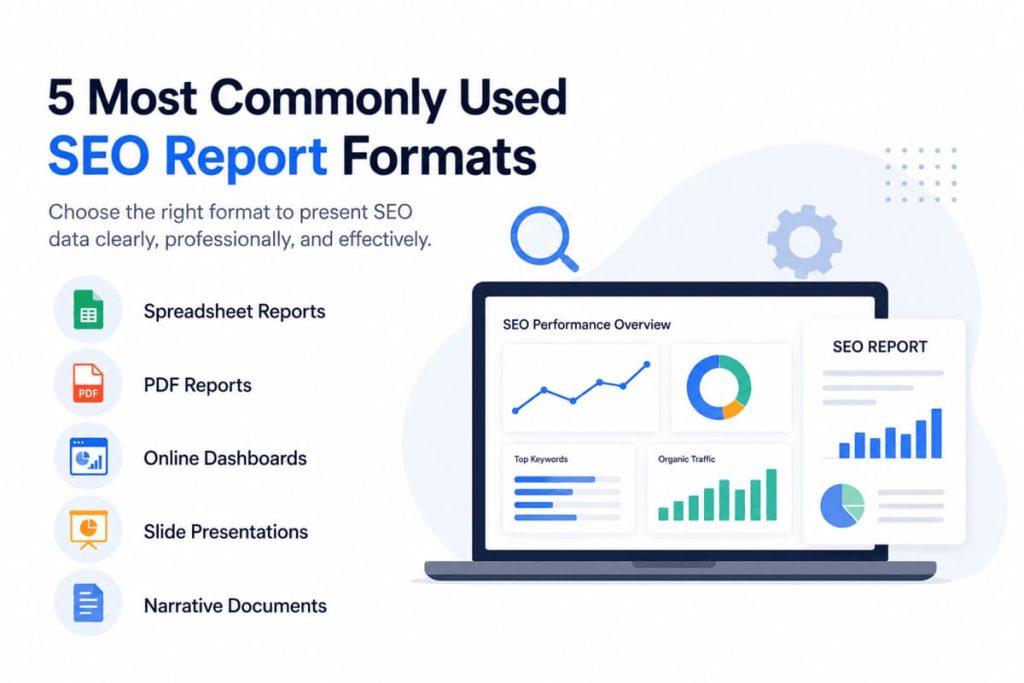
Clear, structured reporting is the backbone of any successful SEO strategy. Without the right format, even the most valuable data can fail to communicate meaningful progress or impact.
Many digital marketers still rely on reports that are either overly technical or too simplistic. This imbalance often creates confusion instead of clarity for clients or stakeholders.
Choosing the right report format is not just about presentation. It is a strategic decision that shapes how SEO performance is understood, evaluated, and acted upon over time.
Why Choosing the Right SEO Report Format Matters
An effective SEO report format transforms raw data into actionable insights. It bridges the gap between technical analysis and business decision-making.
Key advantages of using the right reporting format include:
- Improved data clarity
Structured reporting helps readers quickly identify trends, performance shifts, and key metrics without unnecessary complexity. - Stronger client trust
Professionally presented reports reflect credibility and reinforce confidence in your SEO capabilities. - Faster decision-making
Clear insights enable stakeholders to act quickly without needing additional interpretation or explanation.
Spreadsheet Reports: Flexible for Deep Analysis
Spreadsheet-based reports remain a popular choice due to their flexibility and control over raw data management.
They are commonly used for tracking keyword rankings, backlink profiles, and traffic performance with customizable formulas and filters.
Key strengths of spreadsheet reports include:
- Fully customizable structure
Analysts can tailor data layouts based on specific campaign needs. - Ideal for raw data processing
Perfect for internal analysis before converting insights into client-friendly formats.
However, spreadsheets can feel overwhelming for non-technical clients due to their dense and less visual nature.
PDF Reports: The Professional Client Standard
PDF reports are widely considered the industry standard for client-facing SEO reporting. They provide a clean, consistent, and polished presentation.
These reports typically include performance summaries, visual charts, and strategic insights designed for easy comprehension.
Advantages of PDF reports include:
- Visually appealing and structured
Charts and layouts enhance readability and engagement. - Easy to distribute
Reports can be shared instantly without requiring special access. - Secure and consistent formatting
Ensures the report remains unchanged after delivery.
This format is especially effective for monthly reporting and stakeholder presentations.
Online Dashboards: Real-Time SEO Monitoring
Online dashboards allow continuous access to SEO performance, enabling users to monitor progress without waiting for periodic reports.
This approach increases transparency and gives clients more control over how they explore data.
Key benefits of dashboard-based reporting include:
- Always up-to-date data
Eliminates delays associated with manual reporting processes. - Interactive exploration
Users can filter and analyze data based on their specific interests. - Time efficiency
Reduces repetitive reporting tasks for SEO teams.
Modern solutions like RankPorto combine tracking, visualization, and automation into one seamless workflow.
In practice, using a centralized SEO report system significantly simplifies analysis while improving transparency and reporting consistency for clients.
Slide Presentations: Data Storytelling That Converts
Slide-based reports are highly effective for presenting SEO performance during meetings or strategic discussions.
Rather than focusing on raw data, this format emphasizes storytelling and key takeaways.
Core advantages include:
- Clear visual communication
Simplifies complex data into digestible points and visuals. - Insight-driven structure
Highlights what truly matters instead of overwhelming details. - Ideal for presentations
Enhances engagement during client or stakeholder meetings.
Creating impactful slides requires careful data selection and narrative structure, which can take additional preparation time.
Narrative Documents: In-Depth Strategic Reporting
Narrative reports, typically created in document formats, are used when deeper explanations and contextual insights are required.
They are often applied in SEO audits or long-form strategy reports where detail matters.
Benefits of narrative reports include:
- Comprehensive explanations
Allows for detailed breakdowns of issues and recommendations. - Flexible structure
Combines analysis, insights, and strategic direction in one place. - More personalized communication
Provides depth that visual formats may not fully capture.
However, this format is less efficient for recurring reports due to the time required to produce high-quality content.
Why RankPorto Is a Modern Solution for SEO Reporting
As SEO reporting evolves, efficiency and automation have become essential. RankPorto addresses these needs by integrating multiple reporting formats into a streamlined system.
RankPorto helps agencies and freelancers manage SEO reporting with greater speed, clarity, and consistency.
Key capabilities include:
- Direct integration with Google Search Console and GA4
Automatically pulls essential data such as keyword rankings and traffic performance. - Automated SEO insights
Converts raw data into actionable recommendations without manual analysis. - Automated PDF reports with white-label support
Enables professional report delivery without design effort. - Unified dashboard experience
Centralizes all critical metrics into one intuitive interface.
This approach reduces manual workload while maintaining high reporting standards, allowing SEO professionals to focus on growth and strategy.
F.A.Q
1. What is the most commonly used SEO report format?
The most common formats include spreadsheets, PDF reports, dashboards, slide presentations, and narrative documents for different reporting needs.
2. When should you use dashboards instead of PDF reports?
Dashboards are ideal for real-time monitoring, while PDF reports are better suited for structured monthly client reporting.
3. Do all clients need detailed technical SEO reports?
Not necessarily; most clients prefer clear insights and actionable recommendations over highly technical raw data.
4. How can SEO reporting be made more efficient?
Using automation tools like RankPorto reduces manual work and ensures faster, more consistent reporting processes.
Selecting the right report format ultimately determines how effectively SEO performance is communicated and how quickly decisions can be made based on that data.


